Cobalt Chrome Dental Frameworks Explained
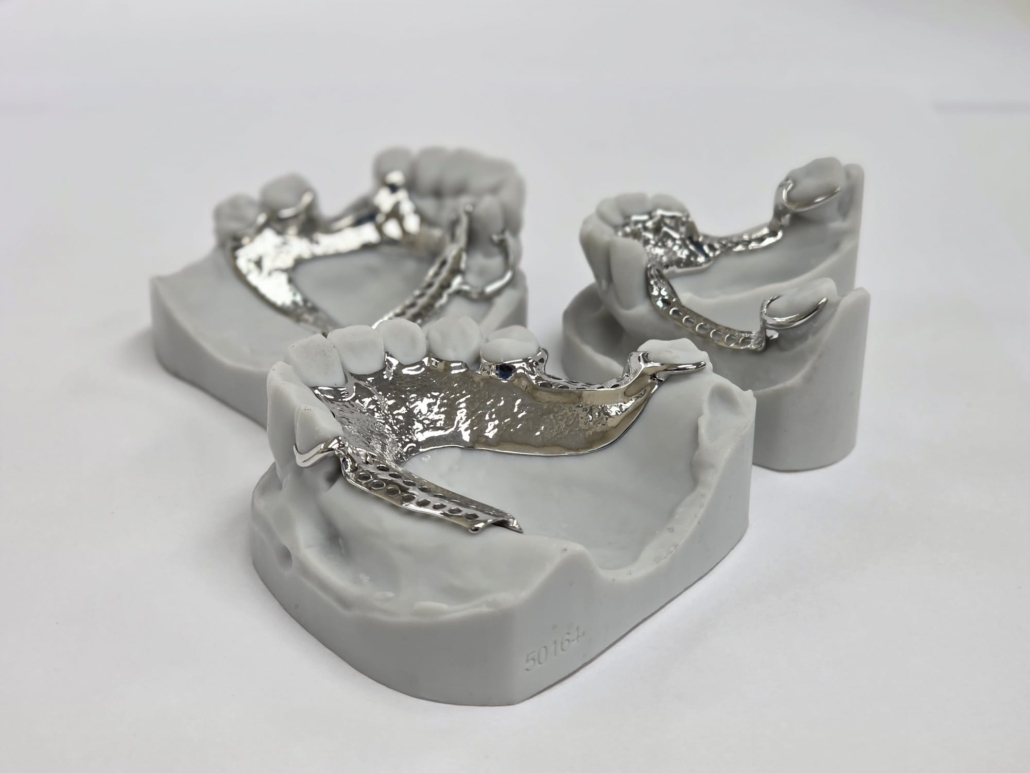
| A cobalt chrome dental framework is the metal structure used in many removable partial dentures to support replacement teeth. The alloy combines high strength with low mass, allowing thin, rigid connectors that are not practical in acrylic dentures. |
Key Points |
|
What Is a Cobalt Chrome Dental Framework?Chrome cobalt, also called cobalt chromium or CoCr, is a dental alloy made mainly from cobalt, chromium and molybdenum. It is widely used to produce removable partial denture frameworks because it combines high strength with low weight and excellent corrosion resistance in the oral environment. The alloy is widely used in dentistry because it combines strength, low weight and corrosion resistance in the oral environment. Chromium forms a protective oxide layer that prevents corrosion, while molybdenum contributes to the alloy’s strength and durability. Together these properties allow cobalt chrome frameworks to be thin, rigid and comfortable for patients while remaining stable under functional load. |
Alloy compositionDental cobalt chrome alloys used in removable partial denture frameworks are typically composed of approximately 60% to 65% cobalt, 25% to 30% chromium and 4% to 6% molybdenum. Small quantities of elements such as silicon and carbon are also present to support casting behaviour and mechanical performance. This alloy combination produces a material that is strong, rigid and highly resistant to corrosion in the oral environment. These properties allow dental frameworks to be manufactured with thin sections while maintaining stability during normal function. |
Mechanical propertiesCobalt chrome has a high modulus of elasticity, making it very stiff compared to gold alloys and considerably stiffer than acrylic. This stiffness allows framework connectors to be thin without flexing under load. Cobalt chrome clasps, when correctly designed and processed, deflect elastically as they pass over the survey line and return to their original position without permanent deformation. |
How Chrome Cobalt Frameworks Are MadeCobalt chrome frameworks for removable partial dentures are produced by one of two methods: lost-wax casting or SLM direct metal printing from a digital file. |
Lost-wax castingA wax pattern of the framework is built on a refractory model by duplicating the master model in refractory investment material. The pattern is invested, wax is burned out and cobalt chrome is cast into the space. The accurate fit of the finished framework depends on controlled investment expansion to compensate for metal shrinkage during solidification. |
SLM-printed frameworksSLM printing produces the framework directly from a CAD design file without a wax pattern or casting stage. The digital impression is used to design the framework in CAD software. The design is built layer by layer in the SLM printer from cobalt chrome powder, then post-processed and finished. SLM eliminates the dimensional variables of casting and produces consistently accurate frameworks across cases. Learn more on our SLM metal printing page. |
Clinical ApplicationsCobalt chrome is used principally in removable partial denture construction, where rigidity, low mass and biocompatibility make it the material of choice for most partial denture prescriptions. |
Advantages for partial denturesA chrome framework can be designed with thinner major connectors than an acrylic design, reducing palatal coverage and improving comfort. Clasps are more precisely positioned, improving retention without obstructing adjacent teeth. The framework is rigid, distributing occlusal load across the support teeth without flexing during function as a full acrylic denture can. |
When cobalt chrome is the right choiceChrome cobalt is appropriate when the prescription requires rigid connectors across a wide span, precision rests or attachments, minimal soft tissue coverage, or when the patient has experienced repeated fracture of acrylic dentures. Acrylic remains appropriate for temporary dentures, immediate dentures and cases where the prosthetic will need frequent modification during a healing phase. |
Frequently Asked Questions |
|
Order chrome cobalt frameworks from Simcast |
